
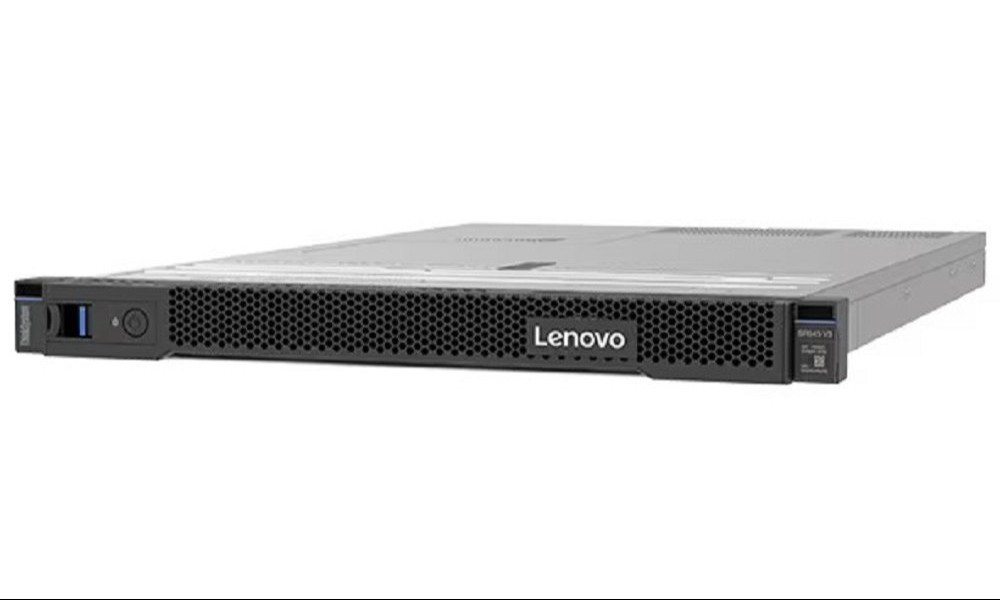
When considering the Lenovo ThinkSystem SR645 V3, one of the most versatile and powerful enterprise servers on the market today, a critical question arises: should you opt for a “Standard Specification” or a “High-End Configuration”? While the base model remains the same, the nuances in configuration can significantly impact performance, budget allocation, and long-term scalability.
This article provides a strategic comparison to help you identify the ideal configuration that aligns with your specific operational requirements.
Who is the “Standard Specification” For?
The standard configuration of the Lenovo ThinkSystem SR645 V3 is engineered for cost-efficiency without compromising enterprise-grade reliability. This setup typically features mid-range CPU core counts, balanced memory (RAM) capacity, and standard high-speed storage.
1. Ideal Use Cases
Core Infrastructure Tasks: Perfect for file servers, web hosting, or domain controllers.
SME Operations: Supports ERP and accounting systems for small to medium-sized enterprises.
Light Virtualization: Capable of handling a moderate number of Virtual Machines (VMs) for internal applications.
Budget-Conscious Startups: An entry point for businesses that require enterprise-level security and stability on a controlled budget.
2. Pros and Cons
Pros: Lower initial CAPEX (Capital Expenditure), sufficient for day-to-day business logic, and maintains the ability for future incremental upgrades.
Cons: May struggle with sudden surges in heavy workloads; might require a hardware refresh sooner if the business scales rapidly.
Who is the “High-End Specification” For?
The high-end configuration of the Lenovo ThinkSystem SR645 V3 is a powerhouse designed for maximum throughput. It is often equipped with high-core-count AMD EPYC™ processors, massive RAM capacity, and ultra-fast NVMe storage, often supplemented by GPU support for specialized tasks.
1. Ideal Use Cases
High-Density Virtualization: Designed to run hundreds of VMs simultaneously with zero latency.
Big Data & Analytics: Optimized for large-scale databases (SQL/NoSQL) and real-time data processing.
AI & Machine Learning: Provides the raw computational power required for training complex algorithms and AI inference.
Large Enterprises: Systems that demand 24/7 uptime and must handle heavy “Peak Load” scenarios without performance degradation.
2. Pros and Cons
Pros: Eliminates performance bottlenecks, offers maximum future-proofing (5+ years), and delivers superior “Performance per Watt.”
Cons: Higher upfront investment; may result in underutilized resources if the workload does not actually require such high specifications.
Head-to-Head Comparison: Standard vs. High-End
When evaluating the Lenovo ThinkSystem SR645 V3, the choice between these two paths depends on four strategic dimensions:
1. Performance
Standard: Reliable for routine tasks but may hit a ceiling during multi-threaded heavy operations.
High-End: Built for “Extreme Workloads,” ensuring fluid system responsiveness even under maximum stress.
2. Budget Strategy
Standard: Focuses on immediate cost-optimization and “pay-as-you-grow” scalability.
High-End: Focuses on long-term ROI by reducing the frequency of hardware upgrades and minimizing downtime.
3. Scalability
Standard: Upgradable, but within a more limited ceiling.
High-End: Offers the highest ceiling for expansion in terms of memory, storage, and specialized processing power.
4. Operational Value
Standard: Best for “Current Needs” stability.
High-End: Best for “Future-Ready” business transformation.
Choosing the right configuration for your Lenovo ThinkSystem SR645 V3 should be a balance of your current workload, available budget, and 3-to-5-year growth plan. While a standard spec is an excellent, cost-effective starting point for general business needs, a high-end spec is a vital investment for data-driven organizations aiming for total digital dominance.
To ensure your server investment yields the highest possible returns, partnering with an expert is essential. Quickserv specializes in consulting and custom-configuring the Lenovo ThinkSystem SR645 V3 to meet your specific business DNA. Whether you need a standard setup for efficiency or a high-end powerhouse for innovation, our team analyzes your actual workloads to provide a configuration that balances performance with fiscal responsibility. With extensive experience in IT infrastructure solutions, Quickserv offers end-to-end services-from installation to comprehensive post-sales support-ensuring your system remains resilient and ready to drive your business forward.